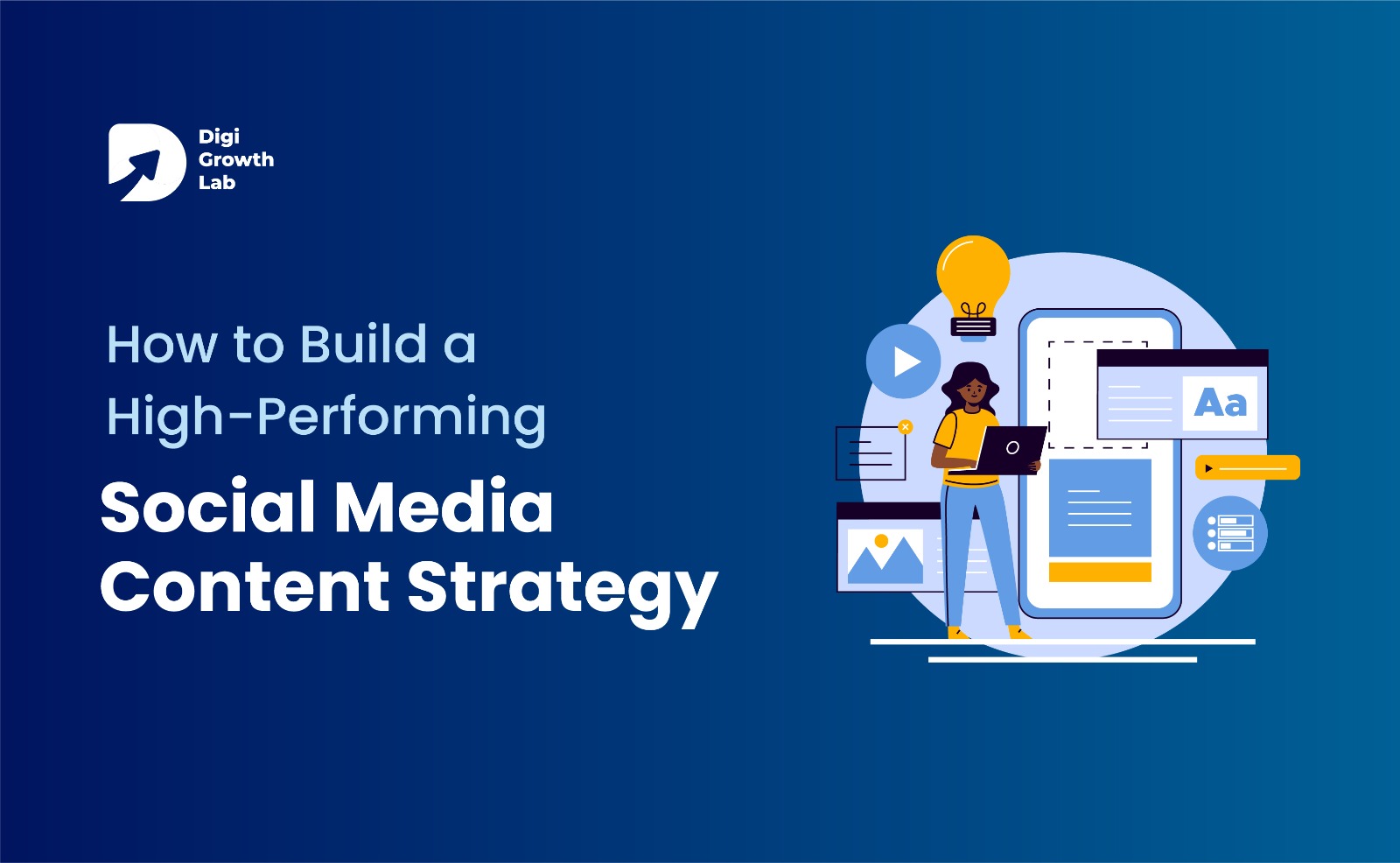
How to Build a High-Performing Social Media Content Strategy in 2026

If you’ve ever felt like you’re “doing everything right” on social media posting regularly, trying new formats, staying active and still not seeing results, you’re not alone. This is one of the most common frustrations for growing businesses today.
The real issue? Most brands confuse consistency with strategy. Posting content without a clear direction doesn’t build growth, it just fills your feed.
In 2026, platforms are far more selective. What works now is content that holds attention, solves a problem, or triggers action. Short-form videos, for example, are leading performance across industries, as reported by HubSpot.
That’s why businesses are shifting from random posting to a defined social media marketing strategy often supported by the experienced social media marketing company to turn content into real business results.
What High-Performing Social Media Content Strategy Includes
Most people think a content strategy is about planning posts. It’s not. A strong strategy answers one simple question: why should someone care about your content, and what should they do next?
To make this practical, here’s a clear structure you can follow:
Content Pillars
Content pillars are the 3–5 themes your brand consistently talks about.
They remove guesswork and keep your content focused.
For example, a service-based business might use:
- Problem-solving content
- Industry insights
- Client results
- Behind-the-scenes
When your pillars are clear, your audience starts recognizing what you stand for.
Audience Persona
Good content doesn’t target “everyone” it speaks directly to a specific type of person.
Instead of broad assumptions, focus on:
- What problem they’re actively trying to solve
- What kind of content they already engage with
- What would make them stop scrolling
This is where most strategies break content is created from the brand’s perspective, not the audiences.
Platform Selection
Being active on every platform often leads to average results everywhere.
Choosing the right platform depends on where your audience already spends time.
- LinkedIn works well for decision-makers and B2B
- Instagram favors visual and short-form content
- YouTube supports deeper, search-driven content
A reliable social media management service usually prioritizes 1–2 platforms instead of spreading efforts thin.
Content Formats
Not every message works in every format.
- Short videos → grab attention
- Carousels → explain concepts
- Text posts → build authority
The goal is to match the format with what the user expects at that moment not just what’s trending.
Distribution Plan
Posting content doesn’t guarantee reach.
Consistency and distribution determine whether your content gets seen or ignored.
This includes:
- Posting frequency
- Timing
- Repurposing the same idea in different formats
A structured approach like a social media calander helps maintain consistency without burnout.
Conversion Path
This is the part most strategies miss.
If your content doesn’t guide the user toward a next step, it won’t generate results.
That next step could be:
- Visiting your profile
- Sending a message
- Clicking a link
When these elements come together, your smm strategy shifts from just content creation to something that actually supports business growth.
Step-by-Step Process to Build a Social Media Content Strategy
Most strategies fail not because people don’t know what to post, but because they don’t connect content with an actual outcome.
If your content isn’t helping you get sales, leads, or visibility in a predictable way, it’s not a strategy it’s trial and error.
Here’s a step-by-step way to build something that works:
Start With a Clear Business Goal
Before anything else, decide what you want from social media.
Are you trying to generate leads, drive product sales, or build brand recall?
- For service businesses → inquiries, booked calls
- For eCommerce → product sales, website traffic
For example, an online store selling perfumes should focus on product discovery + conversion, not just engagement.
Understand Who You’re Trying to Attract
Good content feels relevant because it speaks to a specific person not a broad audience.
Instead of saying “our audience is everyone,” get clear on:
- What they are struggling with
- What influences their buying decision
- What kind of content they already trust
An eCommerce brand might target impulse buyers with quick, visual content, while a consultant may need deeper, trust-building posts.
Build Content Pillars Around Buying Triggers
This is where most people go wrong.
Your content pillars should not just inform they should influence decisions.
For example:
For eCommerce:
- Product benefits
- Use-case videos
- Customer reviews
For services:
- Problem-solution posts
- Case studies
- Expert insights
This ensures your content is not just “useful”, it’s persuasive.
Choose Platforms Based on Buying Behavior
Not all platforms drive the same results.
Think about where decisions happen not just where people scroll.
- Instagram → great for product discovery (eCommerce)
- LinkedIn → better for trust + high-ticket services
- YouTube → strong for research-driven decisions
Many brands waste effort trying to be everywhere, instead of going deeper where results come from. An experienced social media marketing expert approach usually prioritizes performance over presence.
Decide Content Formats Based on Stage of Decision
Different formats influence different stages.
- Short videos → grab attention quickly
- Carousels → explain value or educate
- Testimonials → build trust
- Product demos → drive purchase
For eCommerce, visual proof sells. For services, clarity builds trust.
Set a Posting Frequency You Can Sustain
Consistency builds familiarity and familiarity builds trust.
But consistency doesn’t mean posting daily means showing up regularly without breaks.
For most brands:
- 3–5 posts per week works well
- Mix of formats performs better than repeating one type
A structured social media calander helps avoid last-minute posting and keeps quality consistent.
Track What Actually Moves the Needle
This is where strategy becomes real.
Don’t just track likes track outcomes.
- For eCommerce → clicks, add-to-cart, purchases
- For services → inquiries, DMs, booked calls
For example, a post with fewer likes but higher sales are far more valuable than a viral post with no conversions.
When you follow this process, your social media marketing strategy becomes predictable, not random. And that’s when content starts contributing to actual business growth, not just visibility.
What Type of Social Media Content Works Best in 2026
Most brands don’t have a content problem; they have a content mix problem.
They post reels for reach, maybe a few graphics for engagement, and then wonder why nothing turns into sales or inquiries.
The truth is that no single content type can do everything. Each format plays a different role in moving someone from “just watching” to “actually taking action.”
Think in Funnels, Not Formats
Before choosing formats, understand this:
Every piece of content sits somewhere in the decision journey.
- TOFU (Top of Funnel) → gets attention
- MOFU (Middle of Funnel) → builds trust
- BOFU (Bottom of Funnel) → drives action
Most brands stay stuck at the top chasing views, not outcomes.
Short-Form Videos
Short videos are everywhere for the reason they work.
But here’s what people don’t talk about enough:
they’re great at getting attention, but weak at closing decisions.
For eCommerce:
- Product in use
- Quick transformations
- Lifestyle clips
For services:
- Quick tips
- Relatable pain points
They bring people in but don’t expect them to convert on their own.
Carousels
Carousels don’t go viral as often but they do something more important.
They make people stop, read, and think.
That’s where trust begins.
- “5 mistakes to avoid before buying X”
- “How to choose the right service”
For eCommerce, this helps reduce confusion before purchase.
For services, it positions you as someone who actually understands the problem.
Authority Content
This is the layer most brands skip because it’s harder to create.
Authority content is not about information, it’s about perspective.
- What have you learned from experience?
- What do you disagree with in your industry?
- What patterns are you seeing?
This is what makes someone choose you over others not just follow you.
Conversion Content
This is the part that directly impacts revenue but it’s often underused.
People don’t take action because of your best reel they act when they feel confident.
That confidence comes from:
- Testimonials
- Case studies
- Product reviews
- Real results
For eCommerce → this removes buying hesitation
For services → this reduces trust barriers
How to Plan a Content Calendar That Drives Consistency & Growth
Most people don’t fail at content because of lack of ideas; they fail because everything is last-minute. One day you post 3 times, the next 5 days go silent. That inconsistency is what hurts reach more than anything else.
A good system doesn’t just organize content it removes decision fatigue.
Start With Monthly Direction, Then Break It Weekly
Instead of asking “what should I post today?”, decide:
- What are we focusing on this month? (launch, awareness, sales push)
- What kind of content supports that goal?
Then break it into weekly execution.
This keeps your content aligned with business goals, not random trends.
Use a Fixed Weekly Flow
You don’t need a complex plan, just a repeatable pattern:
- Monday → Educational (teach something useful)
- Wednesday → Engagement (start conversations)
- Friday → Conversion (sell, showcase, or push action)
This works because you’re not guessing you’re following a structure that covers awareness, trust, and action.
Batch Content Like You Batch Work
Creating content daily sounds productive, but it slows you down.
A better approach is to sit once and create multiple pieces together.
- Shoot 5–6 videos in one session
- Write captions in one go
- Design creatives together
This not only saves time but also keeps your messaging consistent. Many brands using a social media management service rely heavily on batching to maintain quality without daily pressure.
Repurposing Is Where Real Scale Happens
Here’s something most people overlook:
You don’t need more ideas you need to use your best ideas more effectively.
One strong piece of content can become:
- A reel
- A carousel
- A text post
- Even a short email
For example, a product demo video can be reused as a testimonial clip or broken into multiple short posts.
This is how brands stay consistent without constantly creating from scratch.
Use Tools, But Don’t Depend on Them
Scheduling tools are helpful but they’re not the strategy.
Use them to:
- Upload content in advance
- Maintain posting consistency
- Avoid missing key days
But the real difference comes from planning, not just scheduling.
Tools support the system, they don’t replace it.
At its core, a strong social media calander is not about filling slots about building a rhythm your audience can rely on.
Once that rhythm is set, content becomes easier to manage and more importantly, more effective over time.
How to Turn Social Media Content into Leads
A lot of content gets attention. Very little of it actually brings business. The difference is simple most content stops at engagement, while high-performing content guides people toward a next step.
Start With a Clear Path
If someone likes your content and then does nothing, the opportunity is lost.
Every post should quietly lead the user somewhere.
A practical flow looks like this:
Content → Clear next step → Focused page → Action taken
That “next step” is where most brands fall short. Either it’s missing, or it’s too vague to act on.
What Actually Converts
People don’t take action because content looks good—they act when it reduces doubt or offers something useful.
Lead Magnets
If you want someone’s contact details, you need to offer something worth their time.
Simple, practical resources work better than overcomplicated offers.
- A checklist
- A short guide
- A quick audit
For example, a service provider sharing “5 things to fix before running ads” will attract more serious prospects than a general post about marketing tips.
Case Studies
This is where decisions start forming.
When people see a real example, they stop guessing whether you can help them.
- What problem was solved
- What approach was taken
- What result came out of it
For eCommerce, this could be customer reviews or before-after results.
For services, it’s actual client outcomes not vague claims.
Problem–Solution Content
This type of content works because it feels personal.
When someone reads a problem they’re already facing, they naturally look for the solution.
- “Getting traffic but no sales?”
- “Posting daily but not getting leads?”
This kind of content doesn’t push it pulls.
A Simple Example
Let’s make this real:
- A post highlights why most businesses get low-quality leads
- It ends with: “If you want a simple checklist, comment ‘audit’”
- People respond → receive a link
- They land on a focused page → submit details
Notice what’s happening here each step feels natural, not forced.
Where Things Usually Break
- No clear next step
- Sending people to a homepage instead of a focused page
- Talking a lot, but not guiding action
Content without direction creates noise. Content with direction creates results.
How Digi Growth Lab Helps You Build a Strategy That Actually Works
Most businesses don’t need more content they need a clearer direction and consistent execution. That’s where Digi Growth Lab focuses its work.
Instead of pushing generic plans, the team looks at:
- Your business model (service or eCommerce)
- What your audience actually responds to
- Which content types are already driving results in your niche
The goal is simple—build a practical system that connects content with real outcomes like engagement, inquiries, or sales.
With hands-on experience across industries, Digi Growth Lab approaches content as a growth process, not just posting similar to how a reliable social media marketing company focuses on long-term performance rather than short-term spikes.