Google Ads Structure: A Complete Guide

Many businesses pour money into Google Ads but still struggle to control their actual results. When performance dips, the first instinct is usually to blame the ad copy or throw more budget at the problem. But more often than not, the real issue is hiding behind the scenes: the Google Ads account structure.
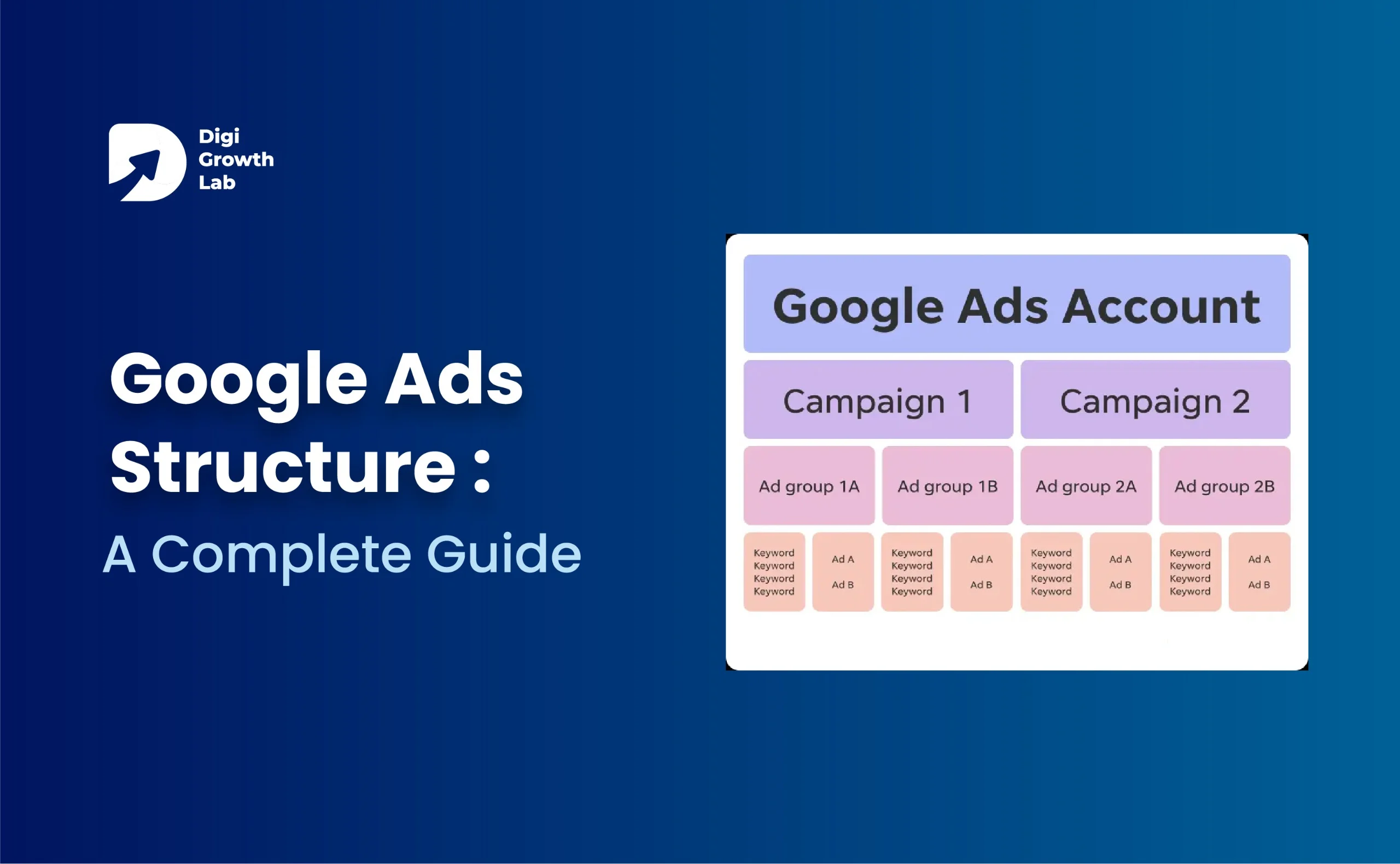
Inside every single account, Google operates on a very specific hierarchy. It works like a cascading system where campaigns sit directly under your main account, ad groups live inside those campaigns, and your keywords act as the connective tissue between your text ads and landing pages.
This underlying framework is what dictates how Google interprets your ads, how your daily budget gets sliced up, and just how relevant your messaging appears to someone actively searching. When you take the time to organize this setup properly, day-to-day management and optimization become significantly easier.
The financial impact of getting this right is huge. Foundational research from WordStream has shown that tightly structured accounts where keywords are grouped logically can dramatically boost Quality Scores and drop your cost-per-click (CPC) by anywhere from 16% to 30% compared to messy campaigns. In today’s PPC environment, where Google relies so heavily on smart bidding and automation, feeding the algorithm a clean, organized structure is more important than ever to get those kinds of savings.
Before we dive into the exact steps of building out your campaigns, it helps to take a step back and understand the basic mechanics of how Google Ads functions and the different campaign types available, as both will heavily influence how you build your account.
Understanding the Google Ads Hierarchy
It’s incredibly common to see advertisers launch campaigns without giving structure a second thought. They dump a list of keywords into a group, write a few quick ads, set a daily budget, and just expect the leads to roll in.
But Google Ads isn’t built to be a simple, plug-and-play tool. It runs on a layered system where every single level pulls different levers and controls a different aspect of your overall campaign. Once you wrap your head around this Google Ads hierarchy, managing the platform starts to feel a lot more logical.
Think of your account structure as a roadmap that teaches Google how to read your business. If that map is clean and direct, Google easily matches your ads with the exact right searchers. If the map is a mess, you end up in a situation where your own ads compete against each other, your relevance scores tank, and your costs naturally inflate.
That internal competition is exactly why experienced ppc experts pay such close attention to how their campaigns are physically organized from day one.
Account Level
At the top sits the Google Ads account. Most businesses only need one account, but this level controls things that affect every campaign inside it.
Two things matter most here:
- Conversion tracking
- User access and billing
If conversion tracking is incorrect at the account level, all campaign data becomes unreliable. Businesses often think campaigns are underperforming when the real problem is tracking.
Before running ads, professionals always verify that conversions are measured correctly. Without that, optimization becomes guesswork.
Campaign Level
Campaigns define the main structure of advertising.
At this level you decide things like:
- budget
- location targeting
- campaign goal
- bidding strategy
This is also where many accounts become disorganized.
A common mistake is putting too many services into one campaign. For example, a home service company might place plumbing, drain cleaning, and water heater repair in the same campaign.
That makes optimization difficult.
A clearer structure would look like this:
Campaign – Emergency Plumbing
Campaign – Drain Cleaning
Campaign – Water Heater Repair
Now each campaign has its own budget and performance data.
This type of PPC campaign structure makes it easier to scale the services that generate the most leads.
Ad Groups
Inside each campaign are ad groups.
This level determines how closely keywords and ads match each other.
Instead of placing dozens of unrelated keywords together, advertisers group keywords by search intent.
Example:
Campaign – Emergency Plumbing
Ad Group – Burst Pipe Repair
Ad Group – Emergency Leak Repair
Ad Group – 24 Hour Plumber
Each ad group targets a slightly different search need.
This allows the ad message to match what people are actually searching for, which improves ad relevance and click-through rate.
Keywords
Keywords represent the phrases people type into Google.
But successful campaigns are not built on quantity. They are built on relevance.
When keywords inside an ad group share the same intent, ads can directly respond to that intent.
For example:
Keyword: emergency plumber near me
Keyword: 24 hour plumber
Both searches reflect urgency. The ad should reflect that urgency too.
Poor keyword grouping is one of the most common reasons campaigns struggle.
Ads
Ads are the bridge between search queries and your business.
But ads only perform well when they reflect the keyword intent.
If someone searches for emergency plumber, the ad should clearly mention emergency service availability.
When ads match search intent closely, two things usually improve:
- click-through rate
- ad relevance
Both signals help improve Quality Score over time.
Landing Pages
The final step in the hierarchy is the landing page.
Many advertisers send all traffic to their homepage. That creates friction for users.
A better approach is alignment.
Keyword → Ad → Landing Page
Example:
Search: emergency plumber near me
Ad: 24/7 Emergency Plumbing Service
Landing Page: Emergency plumbing service page
When these three elements match, visitors find what they expect quickly, and conversion rates improve.
A clean Google Ads structure makes campaign management far easier. It allows advertisers to control budgets, organize keywords properly, and optimize campaigns without confusion.
Once the hierarchy is clear, improving performance becomes much simpler.
Why Google Ads Structure Matters
Most advertisers don’t think about structure when they start running ads. They focus on choosing keywords, writing ad copy, and setting bids. The account grows quickly—new keywords, new ads, more campaigns. After a few months the account becomes difficult to manage, costs begin rising, and performance feels unpredictable.
That situation usually points to one issue: the campaigns were never structured with a clear plan.
Structure Determines How Google Interprets Your Campaign
Google’s system tries to match search queries with the most relevant ad available. When campaigns and ad groups are organized around clear search intent, the platform can understand what each ad is supposed to target.
When structure is messy, multiple ads may compete for the same searches. This internal competition often pushes costs higher and makes performance inconsistent. Advertisers sometimes assume competitors are driving up prices, when in reality their own campaigns are competing with each other.
Structure Prevents Budget Waste
Poor organization often leads to budget leakage. Imagine a campaign that contains dozens of unrelated keywords. Some of those searches may be valuable, while others bring low-quality traffic. Because everything shares the same campaign budget, the platform may spend heavily on the weaker searches.
Separating campaigns by service, product, or intent helps prevent that. It allows advertisers to see where the budget actually goes and adjust it based on performance.
Structure Makes Optimization Possible
Optimization depends on clear data. If a campaign mixes different services or audiences together, the data becomes difficult to interpret. You might see clicks and conversions, but you won’t know which part of the campaign generated them.
When campaigns are organized properly, patterns appear much faster. You can identify strong keyword groups, improve underperforming ads, or shift budget toward the most profitable areas. Without structure, those decisions become guesswork.
Structure Supports Long-Term Growth
Accounts rarely stay small. Businesses expand into new services, locations, or product lines. A structured setup allows new campaigns to be added without disrupting existing ones.
This is one reason experienced advertisers and teams offering ppc management services spend time planning the account before scaling spend. Once the structure is solid, growth becomes much easier to manage.
Common Google Ads Structure Mistakes
If you review enough Google Ads accounts, you start noticing a pattern. Most campaigns don’t fail because of bidding or ad copy. They struggle because the account was built quickly and never organized properly.
Structure problems usually appear slowly. At the beginning everything looks fine. Campaigns run, clicks come in, and the dashboard shows activity. But after a few months the account becomes harder to manage. Costs rise, search terms become messy, and it becomes difficult to understand what is actually working.
Below are some structural mistakes that appear frequently in real accounts.
Treating the Account Like One Big Campaign
A common situation is when businesses place too many services or products inside a single campaign. The intention is usually to keep things simple.
In practice it creates confusion. Different searches compete for the same budget, and it becomes difficult to see which service is actually producing leads. One part of the campaign may perform well while another quietly consumes the budget.
Separating services into their own campaigns gives a clearer picture of performance and makes it easier to control where the money goes.
Building Ad Groups Around Keywords Instead of Intent
Another mistake happens inside ad groups. Some advertisers group keywords together simply because they look similar. The problem is that similar phrases can represent very different user intentions.
Someone searching “plumber near me” is probably ready to hire. Someone searching “cost of plumbing repair” may still be researching.
When those searches share the same ad group, ads struggle to speak directly to the user’s situation. The campaign begins attracting clicks that don’t always convert.
Good structure usually starts by thinking about why someone is searching, not just what words they typed.
Sending Everyone to the Same Page
This one appears in many accounts. Every ad points to the homepage or one general service page.
From a setup perspective it’s easy. From a user perspective it’s frustrating.
When people click an ad they expect to land on a page that answers the search they just made. If the page feels unrelated, they leave quickly. Over time that weakens engagement and conversion rates.
Aligning ads with the right landing pages is a small structural detail that often makes a noticeable difference.
Letting Campaigns Overlap Without Realizing It
As campaigns grow, advertisers sometimes add new ones without reviewing the existing setup. Eventually different campaigns start targeting similar searches.
When that happens, the account may end up competing with itself in the auction. Two campaigns from the same account can try to enter the same search auction without the advertiser realizing it.
The result is messy reporting and sometimes higher costs.
Periodic account reviews help catch these overlaps before they become a larger issue.
Mixing Brand Traffic With Everything Else
Another issue that appears in growing accounts is combining brand searches with general market searches.
Brand searches often perform extremely well because the user already knows the business. If those searches sit inside the same campaign as broader keywords, performance numbers can look better than they actually are.
Separating brand traffic makes the data easier to interpret. It shows how much demand the brand already has and how well advertising is bringing in new customers.
Expanding Campaigns Without Cleaning Up Old Structure
Campaigns rarely stay the same for long. New keywords are added, new locations are tested, and new services are introduced.
Without occasional cleanup, the structure can slowly become cluttered. Old ad groups remain active, duplicate keywords appear in multiple places, and campaigns start overlapping.
At that point optimization becomes harder simply because the account has grown messy.
Experienced advertisers usually schedule periodic account reviews to keep the structure aligned with the current business priorities.
Structural mistakes rarely look dramatic at first, but they quietly influence how campaigns behave over time. Accounts that stay organized tend to be easier to manage and scale, while disorganized ones often require a full rebuild before performance improves.
Best Practices for Structuring Google Ads Campaigns
Once campaigns start spending a meaningful budget, structure stops being a theory. It becomes the difference between understanding performance and guessing. Many accounts look fine on the surface but hide structural problems that only appear after weeks or months of traffic.
Advertisers who manage campaigns long enough usually notice a few patterns.
Structure Around Conversion Paths, Not Keyword Lists
Most accounts are built from keyword research spreadsheets. Campaigns get organized around groups of similar phrases.
But real search behavior rarely follows those neat categories. Some searches indicate curiosity, some show comparison behavior, and others signal immediate intent to buy. When all of those queries are forced into the same campaign, performance signals become mixed.
Experienced advertisers often restructure campaigns around conversion paths for example separating research searches from high-intent searches. This allows different bids, messaging, and landing pages for each stage of the buying process.
Prevent Campaigns From Competing With Each Other
As accounts expand, new campaigns often get added without reviewing the existing ones. Eventually several campaigns start targeting similar search themes.
When that happens, the account can begin competing against itself. Two campaigns from the same account may enter the same auction. The advertiser doesn’t notice immediately, but the effect shows up in rising costs and confusing performance reports.
Regular structural reviews help catch these overlaps before they distort the data.
Let Real Search Queries Redesign the Structure
Initial campaign structures are built on assumptions about how people search. After a few weeks of traffic, the search term report usually tells a different story.
Certain search themes appear repeatedly, others never generate conversions, and some queries reveal completely new services or customer needs. Experienced advertisers treat this information as a signal that the account structure should evolve.
Campaigns often become stronger when they reflect actual search behavior, not the original keyword plan.
Avoid Structures That Become Too Fragmented
For a long time many advertisers relied on extremely granular structures—one keyword per ad group or dozens of tiny campaigns.
While that approach once helped with control, it can create maintenance problems in modern accounts. Hundreds of small segments make reporting slower and optimization harder.
Many experienced advertisers now prefer slightly broader structures that group keywords by search intent rather than isolating every individual phrase.
Design the Account for Future Growth
One of the biggest structural mistakes appears when campaigns begin scaling. An account that works with a small budget may become chaotic when traffic increases.
When campaigns are built with clear boundaries from the beginning, growth becomes easier to manage. New keywords, new locations, or new services can be added without reorganizing the entire account.
The best campaign structures are rarely the most complicated ones. They are simply organized in a way that makes performance easy to understand. When advertisers can quickly see where budget is going and why certain searches convert, optimization becomes far more effective.
How Digi Growth Lab Helps You Manage Google Ads
At Digi Growth Lab, we’ve seen exactly how messy Google Ads accounts can quietly drain a company’s budget. What usually happens is that campaigns naturally grow over time, new keywords get tossed in without a real plan, and suddenly it becomes nearly impossible to figure out what is actually driving your results.
That is exactly where we step in. We always start by taking a hard look at the current structure of your account reviewing how your campaigns are physically organized, how your keywords are grouped together, and how exactly that traffic is flowing to your landing pages. From there, we either refine the existing setup or completely rebuild it so that every single campaign has a clear, profitable purpose.
For example, we recently helped a local home services provider restructure a heavily cluttered account. By simply reorganizing their keyword intent and fixing where their ads were routing traffic, we dropped their cost-per-lead by 40% in just a few weeks.
This kind of highly structured approach makes it so much easier to control your daily spending, actually understand your performance data, and aggressively scale the things that are working. Many businesses choose to partner with Digi Growth Lab specifically because we focus on building out campaigns that stay perfectly organized and profitable, even as your ad spend grows.